Many strong pieces of content do not fail because they lack depth. They fail because they lack orientation. The article may be technically solid, but users have to search for too long before they understand: Am I in the right place? What is the main point? What should I do next?
This is where the RankScan insights “Missing conclusion” and “Missing summary” come in:
- “Missing conclusion”: A longer piece of content has no clear , no TL;DR (“too long; didn’t read”) or no recognizable conclusion.
- “Missing summary”: The text contains no easily scannable sections with , key points or interim conclusions.
These insights are not just layout hints. They affect readability, scanability, information architecture and machine .
The right framing is important:
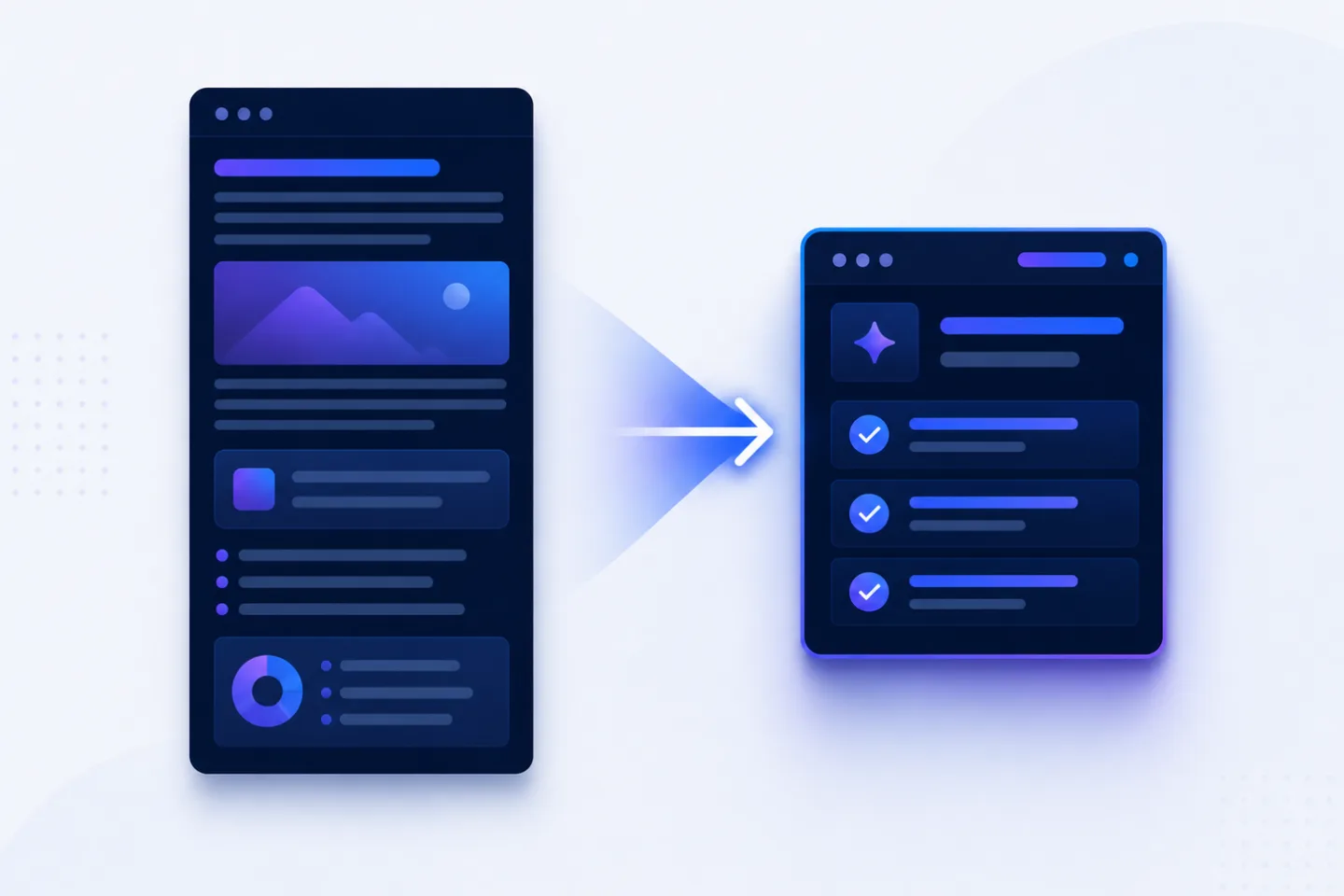
A summary is not a trick. It is a structured condensation of the most important statements for users, search engines and artificial intelligence (AI) systems.
This article explains when you should use TL;DR blocks, key takeaways and conclusions, how to write good summaries and how RankScan can prioritize missing summary structures in a useful way.
- A summary condenses the most important statements of a text.
- A TL;DR appears near the beginning and delivers the core message immediately.
- Key takeaways summarize central insights as a short list.
- A conclusion appears at the end and derives a final assessment or recommended next action from the article.
- Good summaries are understandable on their own, concrete and consistent with the main text.
- Summaries improve the scanability of long content.
- They can help search engines and AI systems extract central statements more easily.
- They do not guarantee , rankings or AI citations.
- A good check prioritizes summary problems mainly for longer guides, studies, comparisons, how-to articles and .
- Short posts, news articles or simple contact pages do not necessarily need a TL;DR.
What Does “Missing Conclusion” Mean? #
The RankScan insight “Missing conclusion” means that a relevant piece of content has no clear short summary.
This is especially problematic for:
- long guides,
- pillar articles,
- studies,
- data-driven posts,
- how-to instructions,
- technical guides,
- product comparisons,
- whitepaper landing pages,
- complex B2B topics,
- frequently asked questions (FAQ) or help-center pages with extensive content.
A good summary answers directly:
What is this about?
What is the most important insight?
Who is the content relevant for?
What decision or action follows from it?
Not every page needs a summary. A short contact page, a login page or a 400-word news post usually does not need its own TL;DR.
What Does “Missing Summary” Mean? #
The RankScan insight “Missing summary” means that the content contains no clearly recognizable sections that condense complex content along the way.
This mainly affects long texts with several subtopics.
Examples of good summary sections:
- “Key Takeaways”
- “The Essentials in Brief”
- “Short Conclusion”
- “What Does This Mean in Practice?”
- “The Most Important Steps”
- “Decision Aid”
- “Checklist”
- “Summary of This Section”
For long articles, a conclusion at the end is often not enough. Users also need orientation while they are reading.
Why Summaries Matter for Users #
Users rarely read websites like books. They scan, jump and quickly decide whether a piece of content is relevant.
The Nielsen Norman Group has described since its early web usability studies that users often scan web text instead of reading word by word. In its classic study, it found that 79% of test users scanned new web pages and only 16% read word by word.
Source: Nielsen Norman Group – How Users Read on the Web
This means:
- The opening has to provide orientation quickly.
- Headings have to be clear.
- Key statements have to become visible.
- Long paragraphs without condensation make reading harder.
- Users need confirmation that the article answers their question.
A good summary helps users decide faster:
Should I read the full article?
Is this the answer I was looking for?
Which points are relevant for me?
Where should I go deeper?
Why Summaries Can Help SEO and AI #
Summaries help search engines and AI systems not because they are magic signals, but because they make content clearer and more structured.
Google recommends helpful, reliable and . This includes content that gives a clear answer, has substance and is written for people.
Source: Google Search Central – Creating helpful, reliable, people-first content
A good summary can help because it:
- formulates the main statement clearly,
- groups important terms and ,
- presents facts and key points compactly,
- makes the content easier to scan,
- structures the text more clearly on a semantic level,
- shows users faster whether the content is relevant.
Google describes featured as special search result displays where an excerpt from a web page may be shown when Google’s systems determine that this format helps users. Site owners cannot force featured snippets.
Source: Google Search Central – Featured snippets and your website
A similar principle applies to AI systems:
Google describes and AI Mode as search features in which web content may appear. Site owners should provide helpful, reliable content and ensure technical accessibility.
Source: Google Search Central – AI features and your website
This means:
A good summary can improve extractability. It does not guarantee an AI mention, a featured snippet or a citation.
TL;DR, Key Takeaways and Conclusion: The Difference #
The three formats have different roles.
| Format | Position | Purpose |
|---|---|---|
| TL;DR | near the top | deliver the core message immediately |
| Key takeaways | near the top or after sections | list the most important insights |
| Conclusion | at the end | derive a conclusion and next action |
All three are summaries, but they are not interchangeable.
TL;DR: Put the Core Message First #
TL;DR stands for “Too Long; Didn’t Read”. In a content context, it means: the most important statement comes right at the beginning.
A good TL;DR:
- appears directly after the H1 or introduction,
- usually contains 2 to 4 sentences,
- answers the main question,
- contains no empty announcement,
- is understandable on its own,
- names the most important conclusion.
Example:
TL;DR: An helps search engines discover important URLs faster. It does not replace and does not guarantee . Only canonical, indexable 200-status URLs belong in the sitemap; should only reflect real content changes.
This is better than:
In this article, you will learn everything important about sitemaps, why they matter and how to use them correctly.
The second version only announces the content. The first delivers the answer.
- long guides,
- studies,
- analyses,
- how-to guides,
- technical instructions,
- comparison articles,
- data-based posts,
- pillar pages.
- contains 5 to 10 points,
- formulates real insights,
- uses short sentences,
- avoids repetition,
- is understandable in isolation,
- prioritizes what matters over details.
- A sitemap is a discovery aid, not an indexing guarantee.
- Only canonical, indexable 200-status URLs belong in the sitemap.
- lastmod should only be updated when real content changes happen.
- A sitemap does not replace internal linking.
- Google ignores changefreq and priority.
Conclusion: Final Assessment Instead of Repetition #
A conclusion appears at the end of the article. It should not simply repeat the introduction.
A good conclusion:
- draws a clear conclusion,
- bundles the most important insights,
- names the next sensible action,
- can include decision support,
- closes the article cleanly.
Weak:
Summaries are important. We hope this article helped you.
Better:
Summaries are especially valuable when content is long, complex or relevant to a decision. Use a TL;DR for the main point, key takeaways for quick orientation and a conclusion for the recommended action. This makes your content easier to read, better structured and easier for machines to process.
Writing a Summary: The Most Important Rules #
1. Answer Instead of Announcing #
Weak:
In this post, we show you how to write a .
Stronger:
A good meta description summarizes the page content briefly and from the user’s perspective, includes a clear benefit and motivates the click. As a guideline, around 120 to 160 characters often work well, but there is no fixed Google limit. It is not a direct ranking factor, but it can influence the in search results.
The summary has to deliver, not tease.
2. Make It Understandable on Its Own #
A good summary works even when it is read in isolation.
Avoid:
- “as mentioned above”,
- “this method”,
- “the following points”,
- unclear pronouns,
- acronyms without explanation,
- context that only appears later.
3. Be Concrete Instead of Generic #
Weak:
Internal links are very important for SEO.
Stronger:
Internal links help search engines discover important pages, understand topical relationships and distribute link signals within the website.
Concrete statements are more useful for users and easier for machines to evaluate.
4. Do Not Make False Promises #
A summary must not claim anything that the main text does not support.
If the TL;DR contains numbers, studies or recommendations, they have to be explained or substantiated in the article.
5. Keep It Short Enough #
A TL;DR should not become a mini article itself.
Practical guideline:
| Format | Length |
|---|---|
| TL;DR | 40–80 words |
| Key takeaways | 5–10 bullet points |
| Interim conclusion | 2–4 sentences |
| Conclusion | 80–180 words |
These are guidelines, not hard rules. Clarity is what matters.
Good and Bad Summaries #
Example 1: Meta Description #
Bad:
In this article, you will learn what a meta description is, why it is important and how you can use it for SEO.
Good:
The meta description is the descriptive text that Google often uses as a snippet. It is not a direct ranking factor, but it can influence the click-through rate. Good descriptions are unique, concrete, benefit-oriented and bring the most important point forward early.
Example 2: JavaScript SEO #
Bad:
JavaScript SEO is an important topic for modern websites and should not be underestimated.
Good:
JavaScript SEO becomes critical when main content, internal links, metadata or are generated only on the client side. For SEO and , it is more robust when important content is already available in the initial (Hypertext Markup Language, the markup language for web pages) or via server-side or static site generation (/SSG).
Example 3: AI Readiness #
Bad:
will become increasingly important in the future, and companies should address it early.
Good:
AI readiness describes whether a website is technically accessible, structured, fact-rich, trustworthy and measurably visible for AI search. A high level of maturity improves the prerequisites for AI mentions, but it does not guarantee a citation in ChatGPT or Google AI Overviews.
When Does a Text Need a Summary? #
Not every piece of content needs the same summary structure.
| Content type | Recommendation |
|---|---|
| Pillar article | TL;DR + key takeaways + conclusion |
| Long guide | TL;DR or “Key Takeaways” + conclusion |
| How-to instruction | Key takeaways or step overview at the top |
| Study / report | Executive summary + key findings |
| Product comparison | Short conclusion at the top + detailed conclusion below |
| FAQ page | Short introduction + clear question-answer structure |
| Short news post | Usually no TL;DR needed |
| Contact page | No summary needed |
| Product page | Short description and central benefits instead of TL;DR |
“Missing conclusion” should therefore not be applied across all URLs in a blanket way. Page type, length and purpose have to be considered.
Machine-Readable Structure: How Summary Blocks Should Be Implemented #
Summaries should not only look good visually. They should also be cleanly structured in HTML.
Good Structure #
<section class="summary" aria-labelledby="summary-heading">
  <h2 id="summary-heading">Key Takeaways</h2>
  <ul>
    <li>An XML sitemap helps search engines with URL discovery.</li>
    <li>It does not replace internal linking.</li>
    <li>lastmod should only reflect real content changes.</li>
  </ul>
</section>
Why this is useful:
- clear heading,
- semantic section,
- real list,
- easy to scan,
- more accessible for screen readers,
- easier for machines to process.
Markdown Structure for Blog Articles #
In Markdown, a summary block can look like this:
## Key Takeaways
- Point 1
- Point 2
- Point 3
or:
> **TL;DR:** A good summary delivers the core message immediately instead of only announcing the article. It helps users enter the content and makes central statements easier to extract.
Important:
- do not use pure design boxes without semantic structure,
- mark lists as real lists,
- give interim conclusions clear headings,
- do not place main statements only in images or graphics.
Summaries and Featured Snippets #
Summaries can help formulate direct answers more clearly. They do not guarantee a featured snippet.
Google explains that featured snippets are generated automatically from web content when systems determine that a highlighted excerpt helps users. Site owners cannot mark or force them directly.
Source: Google Search Central – Featured snippets and your website
What is still useful:
- clear question headings,
- a direct answer immediately underneath,
- precise definitions,
- structured lists,
- tables,
- traceable sources,
- no misleading summaries.
Example:
## What Is an XML Sitemap?
An XML sitemap is a machine-readable file with important URLs of a website. It helps search engines discover and content more efficiently, but it does not replace internal linking and does not guarantee indexing.
This is snippet-friendly without promising a Google display.
Summaries and AI Visibility #
AI systems benefit from clear, compact and fact-dense sections because such content is easier to extract, summarize and embed in answers.
For AI features, Google continues to recommend providing helpful, reliable, user-oriented content and ensuring technical accessibility.
Source: Google Search Central – AI features and your website
For RankScan, the important point is:
A TL;DR can improve citability when it is correct, concrete and verifiable. But it is not a citation hack.
Good summary blocks for AI:
- answer a concrete question,
- contain clear definitions,
- avoid marketing language,
- name important limitations,
- do not refer to later context,
- are consistent with the main text,
- contain no unsupported superlatives.
Editing AI-Generated Summaries #
AI tools can help summarize text. Even so, summary blocks should always be reviewed editorially.
Risks of automated summaries:
- wrong weighting,
- invented details,
- overly generic statements,
- loss of expert nuance,
- contradiction with the main text,
- exaggerated promises,
- unnecessary filler phrases.
A good workflow:
- Have AI create a draft.
- Compare the main statements with the article.
- Check numbers, sources and recommendations.
- Remove marketing language.
- Formulate concrete key points.
- Align the summary with the target audience and .
What to Do After a RankScan Finding #
Step 1: Check the Page Type #
First, clarify whether a summary is actually useful for the page.
Ask:
- Is the page long enough?
- Does the content explain, compare or advise?
- Is the topic complex?
- Does the page support a decision?
- Would users benefit from quick orientation?
- Are there several subtopics?
If the answer is yes several times, a summary structure is likely useful.
Step 2: Define the Main Statement #
Before you write the summary, the central message has to be clear.
Helpful questions:
What should users understand after 20 seconds?
What is the most important conclusion?
Which misconception should be corrected?
What should users do next?
Without a clear main statement, the summary becomes generic.
Step 3: Choose the Right Format #
Select the format based on the page type:
- TL;DR for the direct main statement,
- key takeaways for several important insights,
- executive summary for studies and reports,
- step overview for how-to content,
- short conclusion for comparisons,
- conclusion for final assessment and next action.
Several formats can be combined in long content.
Step 4: Write the Summary #
Good summary writing is precise editing.
Recommendations:
- Start with the answer.
- Use short sentences.
- Avoid empty introductions.
- Name concrete facts.
- Include important terms and entities naturally.
- Mention limitations where needed.
- Do not promise rankings, snippets or AI citations.
- Check whether the summary matches the main text.
Step 5: Build the Structure #
Place the summary where it helps users.
Typical placements:
- TL;DR directly after the introduction,
- key takeaways near the top,
- interim conclusions after long sections,
- conclusion at the end,
- executive summary before detailed analyses.
Use clean headings, real lists and .
Step 6: Check the Impact #
After implementation:
- crawl again with RankScan,
- observe scroll depth,
- check click-through rate (CTR) and behavior,
- monitor data,
- do not expect featured snippets or AI mentions in isolation,
- refine the content if needed.
Prioritization: Which Summary Problems Matter? #
| Problem | Priority | Why |
|---|---|---|
| Pillar article without a summary | High | Orientation is missing in central content |
| Long guide without a TL;DR | Medium to high | Entry point and scanability are weak |
| Study without key findings | High | Most important results are hard to grasp |
| How-to without a step overview | Medium to high | User guidance is weak |
| Comparison without a short conclusion | High | Decision value is missing |
| Long sections without interim conclusions | Medium | Readability is weaker |
| Short news post without a TL;DR | Low | Usually unproblematic |
| Contact page without a summary | Low | Not necessary |
| Missing conclusion in a short text | Low to medium | Depends on the purpose |
The most important rule:
The longer, more complex and more decision-relevant a piece of content is, the more important a good summary structure becomes.
What a Good Summary Check Looks For #
A good summary check should not simply count whether the word “conclusion” appears.
A good check examines:
- is there a summary block near the top?
- are there key takeaways?
- is there a conclusion?
- does the summary fit the page type?
- is the text long enough for a summary to make sense?
- is the summary understandable on its own?
- does it contain concrete key points?
- is it only an announcement?
- are there interim conclusions in long sections?
- are takeaways structured as a real list?
- does the summary contradict the main text?
- are important terms and entities included?
- are there unsupported numbers or promises?
- is the summary clearly visible on mobile?
- is it marked up cleanly on a semantic level?
This turns “Missing conclusion” and “Missing summary” into concrete content-quality tasks.
Example: Pillar Article Without a Summary #
Initial Situation #
A B2B SaaS company publishes a 4,000-word pillar article about AI readiness.
The article is technically strong, but it starts with a long introduction. There is no short summary, no key takeaways and no conclusion with a clear recommendation.
RankScan reports:
“Missing conclusion”
“Missing summary”
Analysis #
The content has potential, but users have to read for too long before the key points become clear.
Problems:
- no quick orientation,
- important definition appears late,
- no compact takeaways,
- sections are long,
- AI systems can find text, but no clear answer blocks,
- conclusion is more of a repetition than a decision aid.
Solution #
- Add a TL;DR block directly after the .
- Add “Key Takeaways” with 7 bullet points.
- End long H2 sections with short interim conclusions.
- Rewrite the conclusion as a recommendation.
- Structure summary blocks cleanly on a semantic level.
- Compare statements with the main text and sources.
- Crawl again with RankScan.
Result #
The article becomes easier to understand. Users recognize the value faster, and central statements are better structured. This does not guarantee rankings or AI citations, but it strengthens readability, information architecture and extractability.
Common Summary Mistakes #
Mistake 1: Announcement Instead of Answer #
“In this article, you will learn ...” is not a summary.
Mistake 2: Too Much Marketing Language #
Summaries should condense facts, not advertise.
Mistake 3: TL;DR Is Too Long #
If a TL;DR is itself hard to scan, it misses its purpose.
Mistake 4: Contradiction With the Main Text #
A summary has to reflect exactly what the article actually says.
Mistake 5: Summary Only at the End #
A conclusion is useful, but long content often also needs orientation at the beginning.
Mistake 6: Key Takeaways Without Real Insights #
Bullet points such as “SEO is important” or “content should be high quality” are too generic.
Mistake 7: Summary Only as an Image or Graphic #
Key statements should be present as text in the HTML, not only in a graphic.
Mistake 8: Making Guarantees #
“With this TL;DR, you will get a featured snippet” is not credible.
Checklist: Writing Good Summaries #
Use this checklist:
- Is there a summary directly near the top for long articles?
- Does it deliver a real answer instead of an announcement?
- Is the main point recognizable in 2–4 sentences?
- Are there key takeaways for complex content?
- Are takeaways concrete insights?
- Are there interim conclusions for very long sections?
- Is there a conclusion with a final assessment?
- Is the summary understandable on its own?
- Is it consistent with the main text?
- Are numbers and claims substantiated?
- Is the structure semantically clean?
- Are lists marked up as real lists?
- Is the summary easy to read on mobile?
- Was an AI draft reviewed editorially?
- Was the page crawled again after the fix?
In addition, thin content and high-quality content, generative engine optimization, AI mentions and citations and semantic HTML help narrow down the root cause and prioritize the next SEO actions.
FAQ About TL;DR, Key Takeaways and Summaries #
What Is a Content Summary?
A summary condenses the most important statements of a text. It helps users quickly understand what the content is about and which key points matter.
What Does TL;DR Mean?
TL;DR stands for “Too Long; Didn’t Read”. In content marketing, it refers to a short summary at the beginning of a longer text.
What Are Key Takeaways?
Key takeaways are the most important insights of an article presented as a short, easy-to-scan list.
What Is the Difference Between TL;DR and a Conclusion?
A TL;DR appears at the beginning and delivers the main point immediately. A conclusion appears at the end and draws a final assessment from the article.
Does a Summary Help SEO?
It can help because it improves readability, structure and direct answers. But it is not a direct ranking lever and does not guarantee better positions.
Does a TL;DR Help With Featured Snippets?
A precise answer block can be snippet-friendly. Featured snippets are generated automatically by Google and cannot be forced.
Does a Summary Help With AI Visibility?
It can improve extractability when it is concrete, correct and fact-rich. However, an AI mention or citation is not guaranteed.
How Long Should a TL;DR Be?
As a guideline, 40 to 80 words or 2 to 4 short sentences are usually enough.
Does Every Article Need a TL;DR?
No. A TL;DR is particularly useful for long, complex or decision-relevant content.
Can I Write a Summary With AI?
Yes, as a draft. But it should always be reviewed editorially so that key points, sources and nuances are correct.
What Does “Missing Conclusion” Mean in RankScan?
The insight means that a relevant longer piece of content does not contain a clear short summary or conclusion.
What Does “Missing Summary” Mean in RankScan?
The insight means that longer content does not contain easily scannable key-takeaway, TL;DR or interim-conclusion structures.
Conclusion: Good Summaries Make Content Easier to Understand Faster #
Summaries are not decorative extras. They are an important structural tool for long and complex content.
The RankScan insights “Missing conclusion” and “Missing summary” show where users and machines receive too little orientation. Especially for pillar articles, guides, studies, comparisons and how-to guides, central statements should be visible quickly.
The best process is:
- Check page type and text length.
- Define the main statement.
- Choose the right format.
- Write a concrete TL;DR or key takeaways.
- Structure long sections with interim conclusions.
- Write the conclusion as a recommendation.
- Implement summary blocks with clean semantic structure.
- Compare statements with the main text and sources.
- Check the page again with RankScan.
This makes content not only more complete, but easier to understand faster: for users, search engines and AI systems that can process clear, well-structured key statements more reliably.