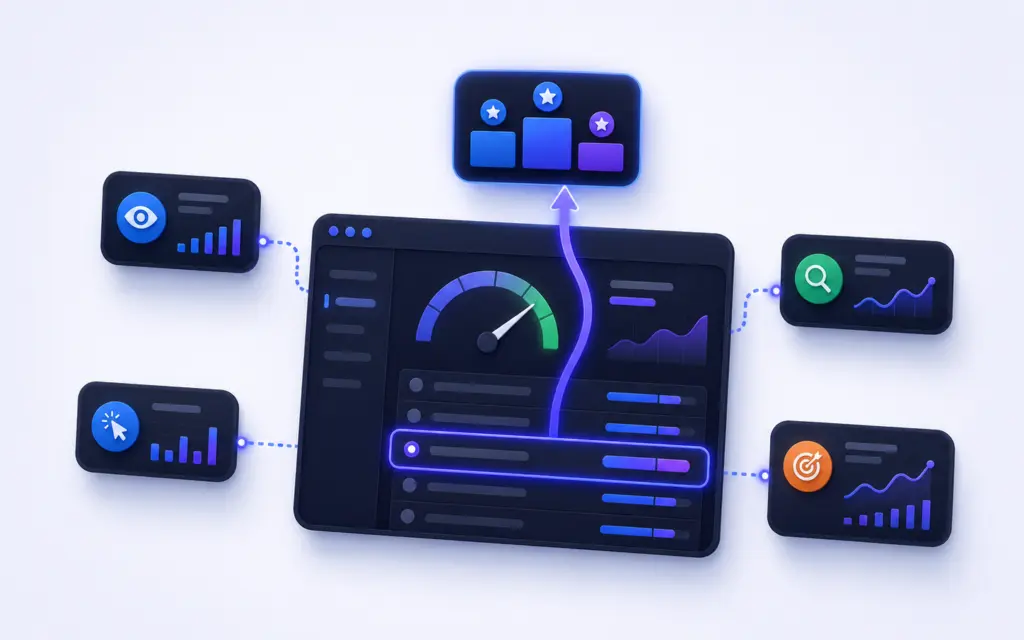
Find, prioritise and turn Striking Distance Keywords into clicks
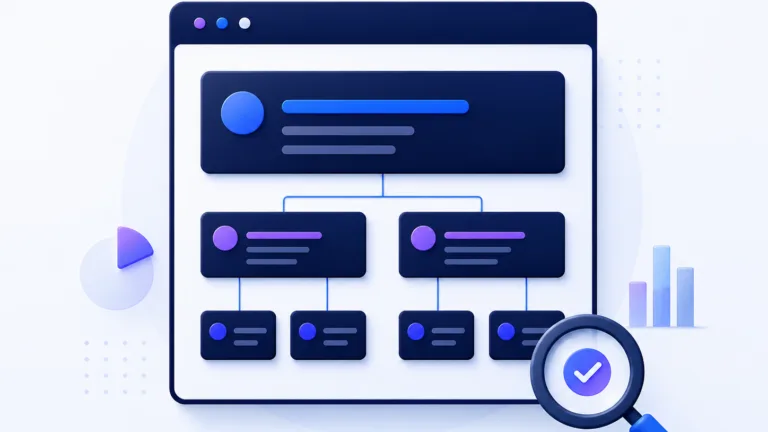
Striking-distance pages rank close to the top results (positions 5–20) with real impressions. Learn how to find, prioritise and optimise them.

Diese Seite ist auch auf Deutsch verfügbar.
Hands-on articles on AI visibility, Search Visibility, Website Health and prioritized actions, so you understand what's slowing your visibility and how to improve it.
Striking-distance pages rank close to the top results (positions 5–20) with real impressions. Learn how to find, prioritise and optimise them.
Low visibility in Google and AI often has an off-page cause. Here's how to deliberately build reviews, listings, backlinks and mentions.
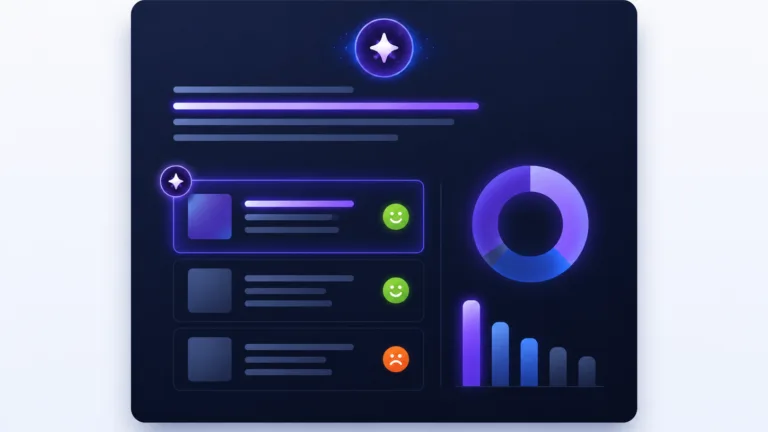
When competitors dominate AI answers or your brand appears negatively, sentiment and share of voice matter. Learn how to measure and improve AI reputation.
Is your brand missing from AI answers, mentioned too late or not cited? Learn how to improve mention rate, position and citation rate in ChatGPT, Perplexity and more.
Summaries make content easier to scan, understand and extract. Learn how to use TL;DR, key takeaways and conclusions so users and AI quickly grasp your key points.
Search engines and AI systems rely on entities. Learn how to define your brand, people and products clearly with Schema, sameAs and consistent signals.
Structured data makes your content machine-readable for Google and AI systems. Learn how to use Schema Markup (JSON-LD) for rich snippets, organization data and FAQ data.
AI crawlers can only use your website if they can access it. Learn how to control GPTBot, ClaudeBot and other crawlers with robots.txt and llms.txt without losing AI visibility.
The AI Readiness Score shows how ready your website is for AI search: the core areas, a self-audit and a prioritized roadmap for improvement.
Generative Engine Optimization (GEO) helps your brand become more visible in ChatGPT, Perplexity and Google AI. Learn the 5 key levers and a practical roadmap.
Rankings dropped? Learn how to find the cause — core update, content decay, technical issues or competitors — and respond systematically instead of optimizing blindly.
What is a visibility index, how is it calculated and what is a good score? Learn how to read SI correctly and improve search visibility systematically.
When several pages compete for the same keyword or the wrong URL ranks, visibility suffers. Learn how to identify and fix keyword cannibalization and URL mismatch.
Orphan pages are hard to find — for users and Google. Learn how to detect orphan pages and build internal links that guide relevance and crawling.
E-E-A-T (experience, expertise, authority, trust) influences quality in Google and AI. Learn how to make authors visible and build real trust signals.
Outdated content loses rankings and trust. Learn how to identify stale content, update it properly and create real freshness signals without fake updates.
Thin content rarely ranks well or earns citations. Learn how to identify weak pages and build fact-rich, well-sourced content that convinces Google and AI systems.
Alt text describes images for screen readers, Google and AI systems. Learn how to write useful alternative text, with rules, examples and edge cases.
A clear heading structure helps users, Google and AI systems. Learn how to use one H1 and a logical H2/H3 hierarchy — with examples and a checklist.
A meta description works like free ad copy in Google Search. Learn how to write descriptions that earn clicks — with ideal length, examples and templates.
The title tag influences rankings and clicks. Learn how to write page titles with optimal length, the main keyword near the beginning and a clear structure.
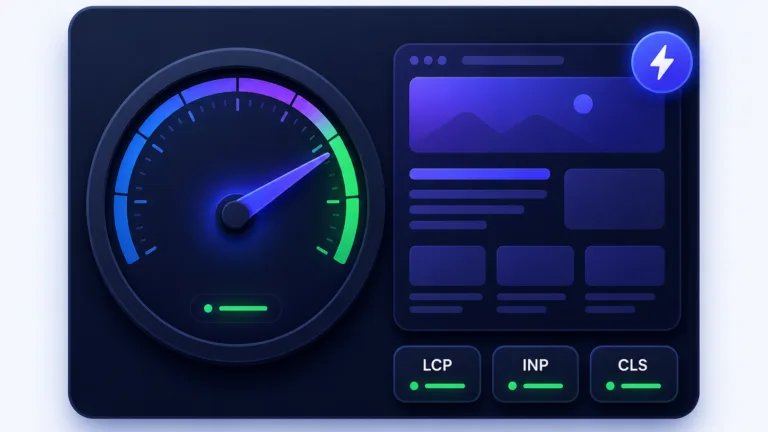
Slow pages cost you users and visibility. Learn how to improve load time and Core Web Vitals (LCP, INP, CLS) with concrete levers, tools and a measurement method.
JavaScript content is often invisible to crawlers and AI systems. Use SSR, prerendering and hydration to make important content reliably readable.
Div-heavy markup makes content harder for machines to understand. Learn how to use semantic HTML5 elements such as main, article and nav for readability, SEO and AI citations.
Duplicate title tags and meta descriptions weaken snippet quality and page clarity. Learn how to identify duplicate content and fix it with unique snippets and canonicals.
404 errors can waste crawl budget, frustrate users and weaken rankings. Learn how to find broken links, fix them with redirects and design a helpful 404 page.
The canonical tag tells Google which URL is the main version. Learn how to set rel=canonical correctly, avoid the 6 most common mistakes and consolidate link signals.
An XML sitemap helps Google find your URLs. Learn how to create a clean sitemap, use lastmod correctly, and submit it in Search Console.
noindex and robots.txt control which pages can appear in Google’s index — and often block important pages by mistake. Learn how to manage crawling and indexing correctly.