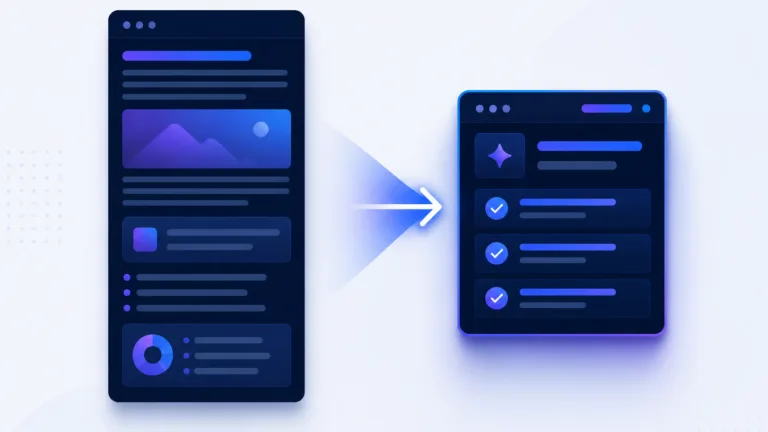
Traditional often asks: Which do we rank for?
adds another question: Do search engines and artificial intelligence (AI) systems clearly understand who we are, what we offer and which topics we are connected to?
This distinction is becoming increasingly important. Search engines and AI systems do not process information only as strings of characters. They process things, concepts, organizations, people, places, products and the relationships between them.
This is exactly where the RankScan insights “Unclear definition” and “Low entity coverage” come in:
- “Unclear entity definition”: the central entity — for example brand, company, product or person — is not defined clearly enough.
- “Low entity coverage”: important entities and their relationships are not covered sufficiently in content, markup or the network.
The right framing matters:
Entity SEO does not guarantee a Knowledge Panel or a mention in AI answers. But it improves the conditions for machines to classify your brand, people, products and topics clearly.
This article shows how to define entities, implement entity markup properly, use sameAs correctly and keep your consistent across your website, and external profiles.
- An entity is a clearly identifiable thing or concept, for example an organization, person, brand, product, service, place or technical term.
- Entity SEO helps search engines and AI systems understand these things and their relationships.
- “Unclear entity definition” means the core entity is too vague, contradictory or purely promotional.
- “Low entity coverage” means important relevant entities, attributes and relationships are missing from the content or markup.
- helps Google better understand and disambiguate administrative details about an organization.
- connects an entity with official profiles or reference pages that clearly confirm its identity.
- Structured data must match the visible content.
- Consistent name, address, profile and brand information is more important than adding as much markup as possible.
- Entity SEO works especially well together with Experience, , Authoritativeness and Trust (), Schema Markup, author profiles, internal linking and .
- A good entity check does not only inspect (), a data format for structured data. It also reviews visible content, structured data, external profiles, internal links and search/AI results.
What Is an Entity? #
An entity is a clearly identifiable object or concept.
Examples:
| Entity type | Example |
|---|---|
| Organization | RankScan, Klarplan AG, Google |
| Person | Founder, author, CEO, expert |
| Product | SaaS tool, e-bike model, CRM system (Customer Relationship Management) |
| Service | SEO audit, Mautic consulting, Google Ads management |
| Place | Zurich, Lucerne, Switzerland |
| Concept | Entity SEO, , |
| Event | Webinar, conference, product launch |
The difference from a keyword:
Keyword: apple
Entity 1: Apple Inc.
Entity 2: apple as a fruit
Entity 3: Apple Records
Humans often recognize the context immediately. Machines need clear signals: text, links, structured data, external confirmation and consistent profiles.
From Keywords to Entities #
In the past, SEO was often understood as pure keyword optimization: placing terms in the title, , text and links.
Modern search is more semantic. Google, Bing, AI systems and knowledge graphs try to identify things and relationships.
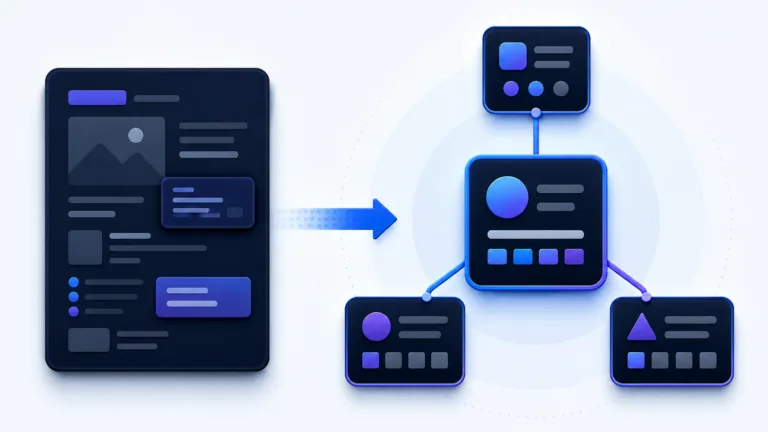
A knowledge graph represents entities as nodes and relationships as edges. An overview of knowledge graphs describes that real-world entities such as people, places or events are modeled as nodes, while relationships connect these nodes.
Source: arXiv – Knowledge Graphs on the Web: An Overview
Example:
RankScan → is a → SaaS tool
RankScan → measures → Search Visibility
RankScan → measures → AI Visibility
RankScan → belongs to → Website Health / Monitoring
RankScan → target audience → SMEs and agencies
The clearer these relationships are, the easier it is for machines to classify your brand.
What Does “Unclear Entity Definition” Mean? #
The RankScan insight “Unclear entity definition” means that an important entity on the website is not defined clearly, consistently or verifiably enough.
Typical symptoms:
- The homepage does not clearly explain what the brand is.
- The About page is highly promotional but low on facts.
- The company name is written in different ways.
- Legal form, headquarters or contact details are missing.
- Organization Schema is missing or incomplete.
sameAsdoes not point to official profiles.- The brand is rarely named clearly in the content.
- Product names are not clearly separated from categories or features.
- Authors only appear as “Admin” or “Editorial team”.
- External profiles contradict the website.
- AI answers describe the brand incorrectly or very vaguely.
Example of a weak definition:
We develop innovative solutions for modern companies.
Better:
RankScan is a SaaS monitoring tool for , and Website Health. It helps marketing teams and agencies continuously monitor rankings, AI mentions, and technical website issues.
The second version names the category, value, target audience and topical context.
What Does “Low Entity Coverage” Mean? #
The RankScan insight “Low entity coverage” means that a page or does not sufficiently cover the relevant entities and relationships.
This can mean:
- important terms are missing,
- central people or organizations are not mentioned,
- product or service names are unclear,
- technical concepts are not defined,
- topic clusters are too thin,
- entities are not internally linked,
- structured data is missing,
- author, product or organization data is missing,
- content contains many generic phrases but few concrete attributes.
Example:
An article about Entity SEO should not just repeat the keyword. It should also cover relevant entities:
Schema.org
Organization Schema
sameAs
Knowledge Graph
structured data
E-E-A-T
author profiles
brand identity
Google Search
AI visibility
Important: entity coverage does not mean randomly adding terms. It is about covering the entities that are technically relevant to the topic and .
Why Entity SEO Matters for Website Health #
Entity SEO is not a separate luxury topic. It connects several Website Health areas:
- structured data,
- Organization Schema,
- author profiles,
- ,
- internal linking,
- ,
- sources,
- brand consistency,
- AI visibility.
Google describes structured data as a standardized format for providing information about a page and classifying its content. Google can use structured data to better understand the content of a page.
Source: Google Search Central – Introduction to structured data
For RankScan, this means:
If entities are unclear, content, schema, trust and AI visibility become weaker too.
Organization Schema: Defining the Company Entity #
For company websites, Organization Schema is usually the central building block.
Google explains that Organization structured data on the homepage can help Google better understand administrative details about an organization and disambiguate it. These details include name, logo, contact information and other organization data.
Source: Google Search Central – Organization structured data
A simple example:
<script type="application/ld+json">
{
  "@context": "https://schema.org",
  "@type": "Organization",
  "@id": "https://example.ch/#organization",
  "name": "Example AG",
  "legalName": "Example AG",
  "url": "https://example.ch/",
  "logo": "https://example.ch/logo.svg",
  "description": "Example AG is a Swiss B2B SaaS provider for Search Visibility and Website Health monitoring.",
  "address": {
    "@type": "PostalAddress",
    "streetAddress": "Bahnhofstrasse 10",
    "postalCode": "8001",
    "addressLocality": "Zurich",
    "addressCountry": "CH"
  },
  "sameAs": [
    "https://www.linkedin.com/company/example-ag",
    "https://www.youtube.com/@example"
  ]
}
</script>
Important:
- keep
@idstable, - use absolute URLs,
- make the logo accessible,
- keep visible company data consistent,
- use only real official profiles in
sameAs, - do not add invented profiles, reviews or awards.
sameAs: Linking Identity Clearly #
The sameAs field is an important disambiguation signal.
Schema.org defines sameAs as the URL of a reference page that clearly indicates the identity of an item, for example Wikipedia, Wikidata or the official website.
Source: Schema.org – sameAs
Suitable sameAs targets:
- official LinkedIn company profile,
- official YouTube profile,
- official GitHub profile,
- official X/Twitter profile,
- official Facebook/Instagram profile,
- Wikidata entry, if present and justified,
- Crunchbase or industry profiles, if relevant,
- App Store or marketplace profiles,
- official product profiles.
Not suitable:
- private profiles,
- unofficial fan pages,
- outdated profiles,
- profiles with contradictory names,
- low-quality paid directory entries,
- third-party brand profiles,
- artificial or unverifiable wiki entries.
The rule is:
Use sameAs only for profiles that truly confirm the same entity clearly.
Entity Markup Is More Than Organization Schema #
Depending on the website type, additional Schema types can be useful.
| Entity | Suitable markup | Typical use |
|---|---|---|
| Company | Organization, LocalBusiness | Homepage, contact, About page |
| Person | Person, ProfilePage | Authors, team members, experts |
| Article | Article, BlogPosting | Guides, news, expert articles |
| Product | Product, Offer | Shops, SaaS products, product pages |
| Service | Service | Service pages |
| Frequently Asked Questions (FAQ) | FAQPage | Visible FAQ sections |
| Navigation | Subpages, categories | |
| Location | LocalBusiness, Place | Branches, local providers |
Google’s general structured data guidelines state that markup should represent the visible content of the page and should not be used for content that is not visible to users or is misleading.
Source: Google Search Central – General structured data guidelines
So Schema is not a replacement for clear content. It is a machine-readable addition.
The Visible Entity Definition: Not Just JSON-LD #
A common mistake: companies implement Organization Schema, but the visible website remains vague.
Weak:
We are your innovative partner for digital transformation.
Stronger:
Example AG is a Swiss digital agency based in Zurich. The company helps B2B organizations with websites, marketing automation, CRM integrations and Search Visibility.
A good visible entity definition includes:
- name,
- category,
- location or market,
- target audience,
- service area,
- core products,
- differentiator,
- evidence or trust signals.
Example formula:
[Brand] is a [category] for [target audience] focused on [topics/services] in [market/region].For RankScan:
RankScan is a SaaS monitoring tool for marketing teams and agencies. It measures Search Visibility, AI Visibility and Website Health and helps identify technical SEO problems, ranking changes and AI mentions early.
Covering Entities Clearly in Content #
Entity coverage happens in visible content.
A strong page does not only answer a question. It also classifies central entities, attributes and relationships.
EAV-E Pattern #
A useful pattern is:
Entity → Attribute → Value → EvidenceExample:
RankScan → measures → Citation Rate → based on repeated prompt sets and source links in AI answers.Or:
Organization Schema → describes → company data → with fields such as name, url, logo, contactPoint and sameAs.This pattern helps turn vague claims into verifiable information.
Internal Linking as an Entity Network #
Internal links connect entities and topics.
Example:
AI Readiness Score → JavaScript SEO → Schema Markup → E-E-A-T → AI mentionsWhen these pages are linked internally in a meaningful way, a semantic network emerges.
Good internal entity linking:
- links to detailed articles,
- detailed articles link back to the pillar page,
- product pages link to relevant use cases,
- author profiles link to articles,
- glossaries link to guides,
- case studies link to services,
- organization links to team, products and contact.
Google recommends making links and using descriptive so that users and Google can better understand the linked content.
Source: Google Search Central – Links best practices
Entities, E-E-A-T and Trust #
Entity SEO is closely connected to E-E-A-T.
When a website publishes expert content, the relevant people and organizations should be clearly identifiable:
- Who wrote the content?
- Which organization publishes it?
- What experience or expertise is present?
- Are there sources?
- Is there an author page?
- Do author, organization and markup match?
In its documentation on creating helpful, reliable, , Google recommends checking whether content demonstrates originality, substance, sources and trustworthiness, among other things.
Source: Google Search Central – Creating helpful, reliable, people-first content
For RankScan, this means:
- weak author entities weaken expert content,
- weak organization data weakens brand trust,
- missing sources weaken credibility,
- contradictory profiles make machine classification harder.
Entity SEO and AI Visibility #
Entity SEO is especially relevant for AI visibility, but it is not magic.
A clear entity helps AI systems assign answers more accurately:
- Which brand is meant?
- Which products belong to it?
- In which market is the brand active?
- Which topics does it cover?
- Which sources confirm this classification?
- Is the brand confused with competitors?
Google describes and AI Mode as search features where content from the web can appear. Website owners should continue to provide helpful, reliable content and ensure that the technical requirements for Google Search are met.
Source: Google Search Central – AI features and your website
Important:
Entity SEO does not automatically increase the citation rate. But it improves the conditions for a brand to be recognized as clear, topically relevant and trustworthy.
Prioritization: Which Entity Problems Matter? #
| Problem | Priority | Why |
|---|---|---|
| Company name is inconsistent | High | high risk of confusion |
| Organization Schema missing on a company website | Medium to high | central machine readability is missing |
sameAs missing or pointing to wrong profiles | Medium to high | weak disambiguation |
| About page is purely promotional | Medium | little verifiable entity data |
| Authors only listed as “Admin” | Medium to high | weak person entities |
| Product names and categories are vague | Medium to high | makes classification and AI answers harder |
| External profiles contradict the website | High | trust and identity problem |
| Missing internal links between entities | Medium | semantic network is weak |
| Small website without external profiles | Low to medium | depends on goal and market |
| No Wikidata entry | Low to medium | helpful, but not mandatory |
The most important rule:
Clarify the core entity first: name, category, URL, profile, organization, offer and official external references.
What to Do After a RankScan Finding #
When RankScan reports “Unclear entity definition” or “Low entity coverage”, proceed systematically.
Step 1: Identify Core Entities #
List the most important entities:
- brand,
- organization,
- products,
- services,
- people,
- locations,
- topics,
- target markets,
- competitors,
- tools,
- methods.
Step 2: Define the Entity for Each Page #
Ask for every important page:
Which main entity does this page describe?
Which secondary entities need to appear?
Which relationships should become clear?
Example:
Page: /ai-readiness-score/
Main entity: AI Readiness Score
Secondary entities: GEO audit, AI visibility, JavaScript SEO, Schema Markup, Citation Rate, RankScan
Step 3: Improve the Visible Definition #
Check:
- Is the entity clearly named?
- Is it defined?
- Are there attributes?
- Are there examples?
- Is there evidence?
- Are there internal links?
- Is there suitable markup?
Step 4: Add Schema Markup #
Depending on the page:
- Organization,
- LocalBusiness,
- Person,
- ProfilePage,
- Article,
- Product,
- Service,
- BreadcrumbList,
- FAQPage.
Make sure that:
- visible content and markup match,
@idis used consistently,- the is used,
- absolute URLs are used,
- no contradictory types are set,
- no fake profiles are added to
sameAs.
Step 5: Check External Profiles #
Review:
- LinkedIn,
- Google Business Profile,
- industry directories,
- partner pages,
- review platforms,
- app stores,
- GitHub,
- Crunchbase,
- Wikidata, if justified,
- trade media,
- customer cases.
Ask:
Is the brand described consistently everywhere?
Are name, URL, logo and category consistent?
Step 6: Test After the Fix #
Check:
- Test,
- Schema Markup Validator,
- Google ,
- brand search,
- Knowledge Graph Search ,
- ChatGPT/Perplexity test,
- RankScan re-crawl,
- prompt monitoring.
The Google Knowledge Graph Search API can search for entities in the Google Knowledge Graph and uses schema.org types as well as JSON-LD compatibility. It is useful for checks, but it is not a complete view into all Google systems.
Source: Google Knowledge Graph Search API
What a Good Entity SEO Check Looks At #
A good entity check should not only verify whether Organization Schema exists.
A good check reviews:
- clear visible definition of the organization,
- consistent brand naming,
- Organization Schema,
@id,sameAs,- logo,
- URL,
- contact and address,
- Name, Address, Phone () and their consistency,
- Person/,
- ProfilePage markup,
- Product/Service markup,
- ,
- internal links between entities,
- external profiles,
- contradictory profiles,
- brand search,
- AI description of the brand,
- competitor confusion,
- entity coverage per topic cluster,
- visible evidence and sources.
This turns “Unclear entity definition” and “Low entity coverage” into concrete Website Health tasks.
Example: Brand Is Confused With Another Company #
Starting Point #
A Swiss consulting company has the same or a similar name as another company in the DACH region.
RankScan reports:
“Unclear entity definition”
“Low entity coverage”
Analysis #
- The company name is written inconsistently.
- Organization Schema is missing.
- The About page is promotional and fact-light.
- The LinkedIn profile uses a different short description.
- Google Business Profile and website show different categories.
- Expert articles only say “we” instead of the full brand name.
- AI answers mix up the two companies.
Solution #
- Define a consistent brand name.
- Make the homepage and About page more factual.
- Add Organization Schema with a stable
@id. - Use
sameAswith official profiles. - Update LinkedIn, Google Business Profile and directories.
- Add author profiles and trust signals.
- Strengthen internal links to central brand and service pages.
- Recheck AI and brand searches after a few weeks.
Result #
The brand is described more clearly and better distinguished from other entities. This does not guarantee a Knowledge Panel or AI citation, but it reduces confusion risks and weak identity signals.
Common Entity SEO Mistakes #
Mistake 1: Schema Without Visible Substance #
Structured data should reflect visible content, not replace it.
Mistake 2: sameAs With the Wrong Profiles #
sameAs may only point to profiles that truly represent the same entity.
Mistake 3: Forcing Wikidata or Wikipedia #
Not every brand needs or deserves an entry. Manipulative or unsupported entries can be deleted and damage trust.
Mistake 4: Writing Company Names Inconsistently #
“Example”, “Example AG”, “EXAMPLE GmbH” and “Example Switzerland” can confuse machines if the relationship is not clearly explained.
Mistake 5: Ignoring Authors #
For expert content, people are entities too. “Admin” is not a trust signal.
Mistake 6: Too Many Schema Types Without a Main Entity #
A page should have one clear main entity. Multiple markup types can be useful, but they must not become contradictory.
Mistake 7: Not Maintaining External Profiles #
If external sources contain outdated information, they weaken entity clarity.
Checklist: Check Entity SEO #
Use this checklist:
- Is the brand clearly defined on the homepage?
- Is the legal form or organization clearly named?
- Is there a fact-based About page?
- Is Organization Schema present?
- Is there a stable
@id? - Are name, URL, logo and description correct?
- Does
sameAscontain only official profiles? - Are external profiles consistent?
- Are NAP details consistent?
- Are there author profiles for expert content?
- Is there Person or ProfilePage markup?
- Are product or service entities clearly named?
- Are there internal links between brand, services, products, people and topics?
- Are important technical entities defined in the content?
- Are there sources or evidence for central claims?
- Is the brand described correctly in AI answers?
- Is there confusion with similarly named organizations?
In addition, semantic HTML helps narrow down the cause cleanly and prioritize the next SEO measures.
FAQ About Entity SEO #
What is Entity SEO?
Entity SEO ensures that search engines and AI systems can clearly recognize brands, people, products, services and topics and understand how they relate to each other.
What is an entity in an SEO context?
An entity is a clearly identifiable thing or concept, for example a company, person, product, place or technical topic.
What does “Unclear entity definition” mean?
This RankScan insight means that an important entity is not defined clearly, consistently or machine-readably enough.
What does “Low entity coverage” mean?
This insight means that relevant entities, attributes or relationships are not covered sufficiently in content, markup or the internal link network.
What is Organization Schema?
Organization Schema is structured markup for company data such as name, URL, logo, contact details, address and official profiles.
What is sameAs?
sameAs is a Schema.org property that lets you point to reference pages that clearly confirm the identity of an entity.
Do I need Wikidata or Wikipedia for Entity SEO?
Not necessarily. These entries can be helpful, but they must be justified, verifiable and compliant with the rules. For many companies, consistent website, LinkedIn, Google Business and industry profiles are more realistic.
Does Entity SEO guarantee a Knowledge Panel?
No. Entity SEO can help Google understand and disambiguate an entity, but it does not guarantee a Knowledge Panel.
Does Entity SEO help with AI visibility?
Yes, as a foundation. Clear entities, consistent profiles and structured data can help AI systems classify a brand more accurately. But a mention or citation is not guaranteed.
Is Schema Markup enough for Entity SEO?
No. Schema Markup is important, but it needs to be supported by visible content, external profiles, trust signals and consistent identity data.
Conclusion: A Brand Must Be Recognizable as an Entity #
Entity SEO is the foundation that allows search engines and AI systems to understand a brand not just as a website, but as a clearly describable entity.
The RankScan insights “Unclear entity definition” and “Low entity coverage” show where this foundation is missing: unclear brand descriptions, weak Organization Schema, missing sameAs links, inconsistent profiles or insufficient topical coverage.
The best approach is:
- identify core entities,
- sharpen visible definitions,
- add Organization, Person, Product or Service markup,
- use
sameAsonly for official profiles, - make external profiles and NAP data consistent,
- name entities concretely in the content,
- build internal links as a semantic network,
- regularly check brand searches and AI answers.
This makes your brand not only findable, but machine-readable: clearer, more consistent and easier to classify for classic search, knowledge graphs and modern AI answer systems.
Sources and Further Reading #
- Google Search Central – Introduction to structured data
- Google Search Central – Organization structured data
- Google Search Central – General structured data guidelines
- Google Search Central – Links best practices
- Google Search Central – Creating helpful, reliable, people-first content
- Google Search Central – AI features and your website
- Google Knowledge Graph Search API
- Schema.org – Organization
- Schema.org – sameAs
- arXiv – Knowledge Graphs on the Web: An Overview